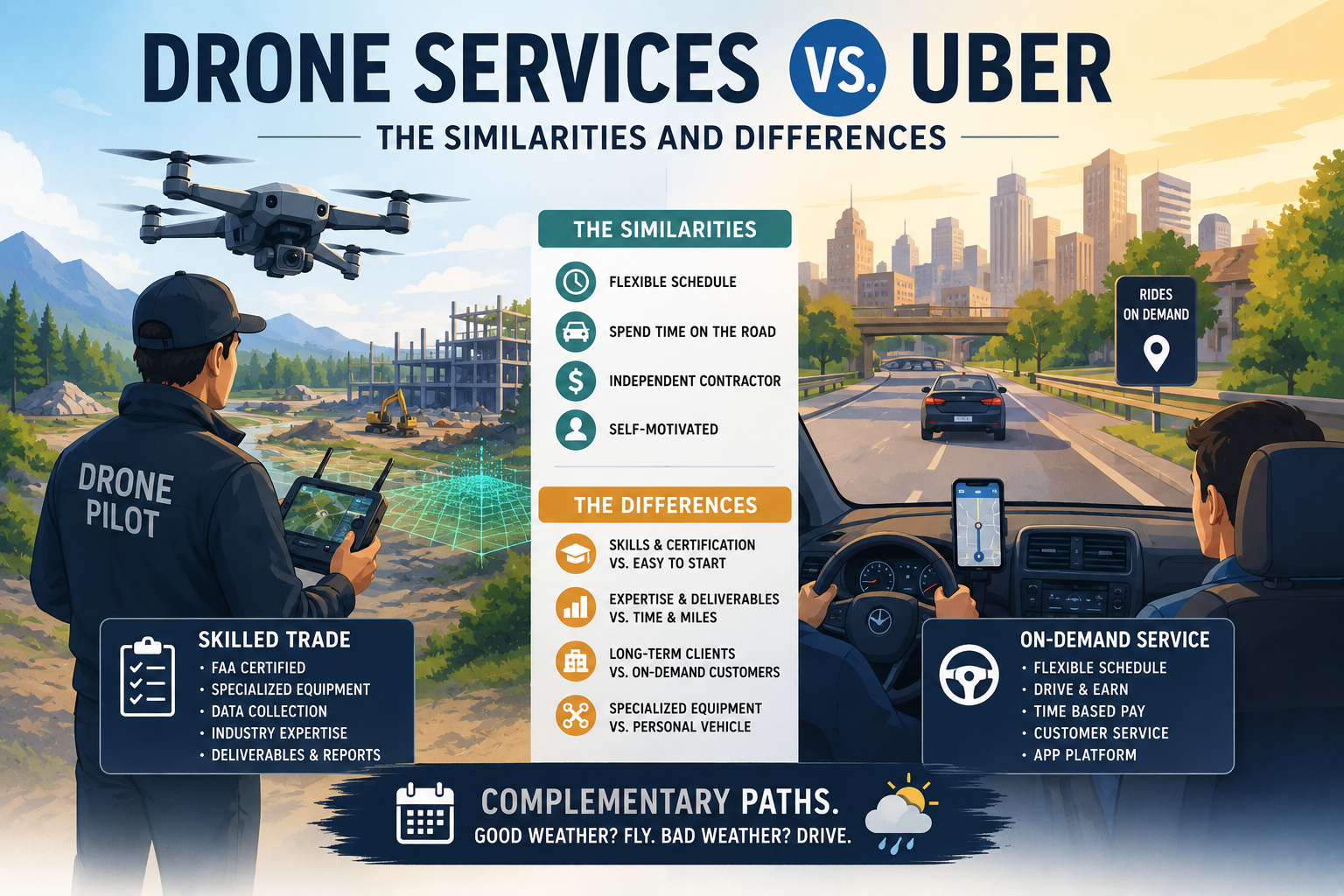
The two can even complement each other well. Drone work is heavily dependent on weather, daylight, and client demand. On rainy, windy, or otherwise unflyable days, some operators choose to supplement their income with rideshare or delivery services. Both industries reward self-motivation, efficient routing, and the ability to manage your own schedule.
The biggest difference is that drone services are generally a skilled trade rather than an on-demand labor platform. A professional drone pilot must obtain FAA certification, invest in equipment, maintain insurance, understand airspace regulations, and often learn additional skills such as mapping, inspections, construction documentation, or data processing. While an Uber driver is typically paid for their time and miles driven, a drone pilot is paid for the expertise and deliverables they provide.
For many people, drone services represent an opportunity to move beyond the traditional gig economy. It still offers flexibility and independence, but with the potential to develop specialized skills, build long-term client relationships, and grow a business that can command higher rates than most rideshare or delivery work.