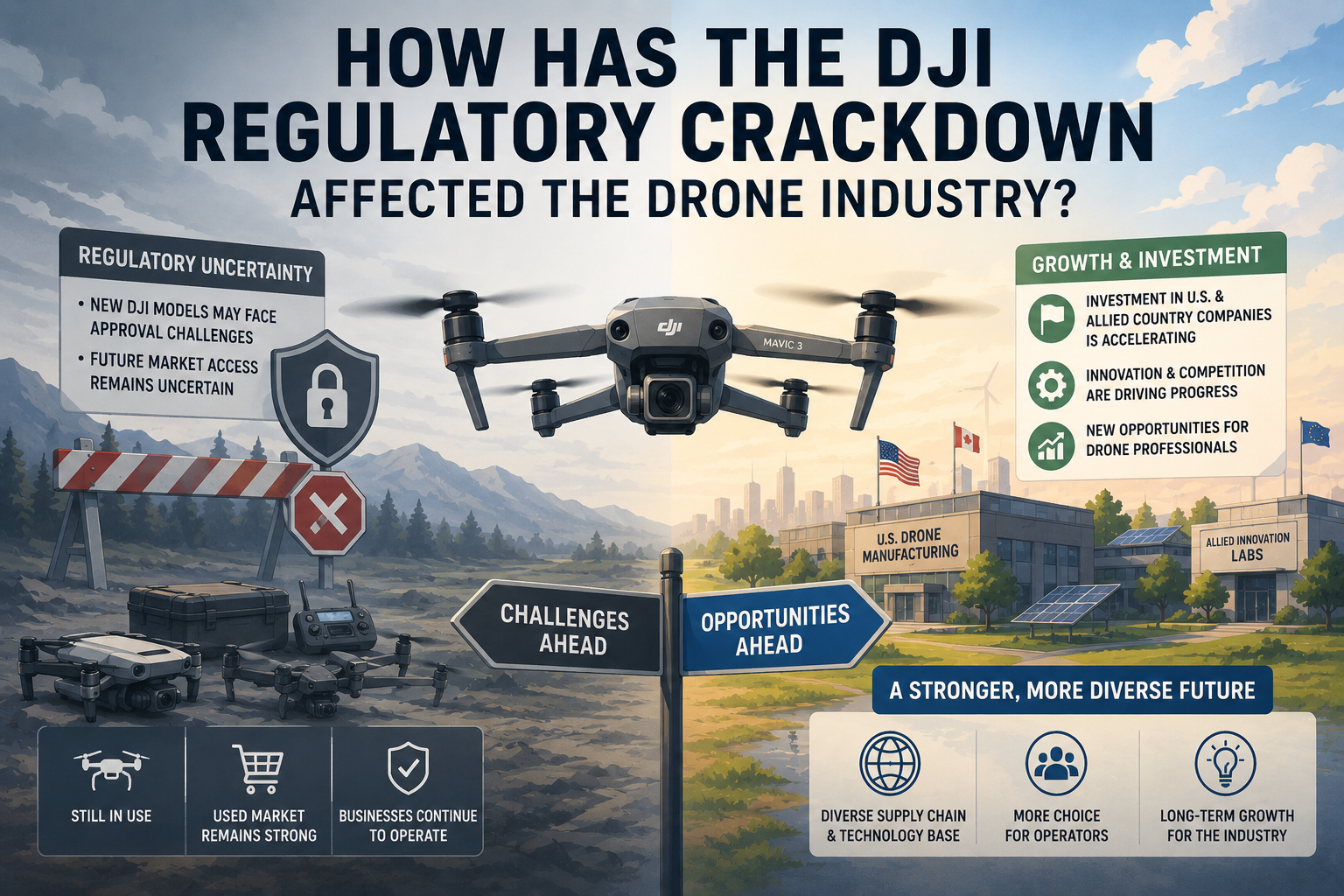
For most pilots, the immediate impact has been smaller than many expected. Existing DJI drones remain widely used throughout the industry, and a large secondary market continues to exist for used aircraft, batteries, and accessories. Companies that already own DJI fleets are generally continuing to operate them, and many pilots can still purchase used equipment to support their businesses.
The larger question is what happens to future DJI products. If new models face challenges obtaining approval for sale or operation in the United States, the market could gradually shift as existing fleets age out of service. This uncertainty has encouraged many organizations to evaluate alternative platforms and diversify their equipment strategies rather than relying on a single manufacturer.
At the same time, the regulatory environment has accelerated investment in drone manufacturers based in the United States and allied countries. While these companies still face challenges competing with DJI's scale and ecosystem, increased government support, enterprise demand, and private investment are helping drive innovation across the industry. For drone professionals, the result may ultimately be a more diverse marketplace with additional opportunities, even if the transition period creates short-term uncertainty.