One of the biggest misconceptions is that becoming a drone pilot alone is enough to build a successful career. In many cases, the most successful operators combine drone services with another profession or area of expertise. Land surveyors use drones to accelerate fieldwork, construction managers leverage aerial data to track project progress, real estate agents create marketing content, and engineers use drones to inspect assets more efficiently. The drone is increasingly becoming a tool within a larger professional skill set rather than a standalone business for many operators.
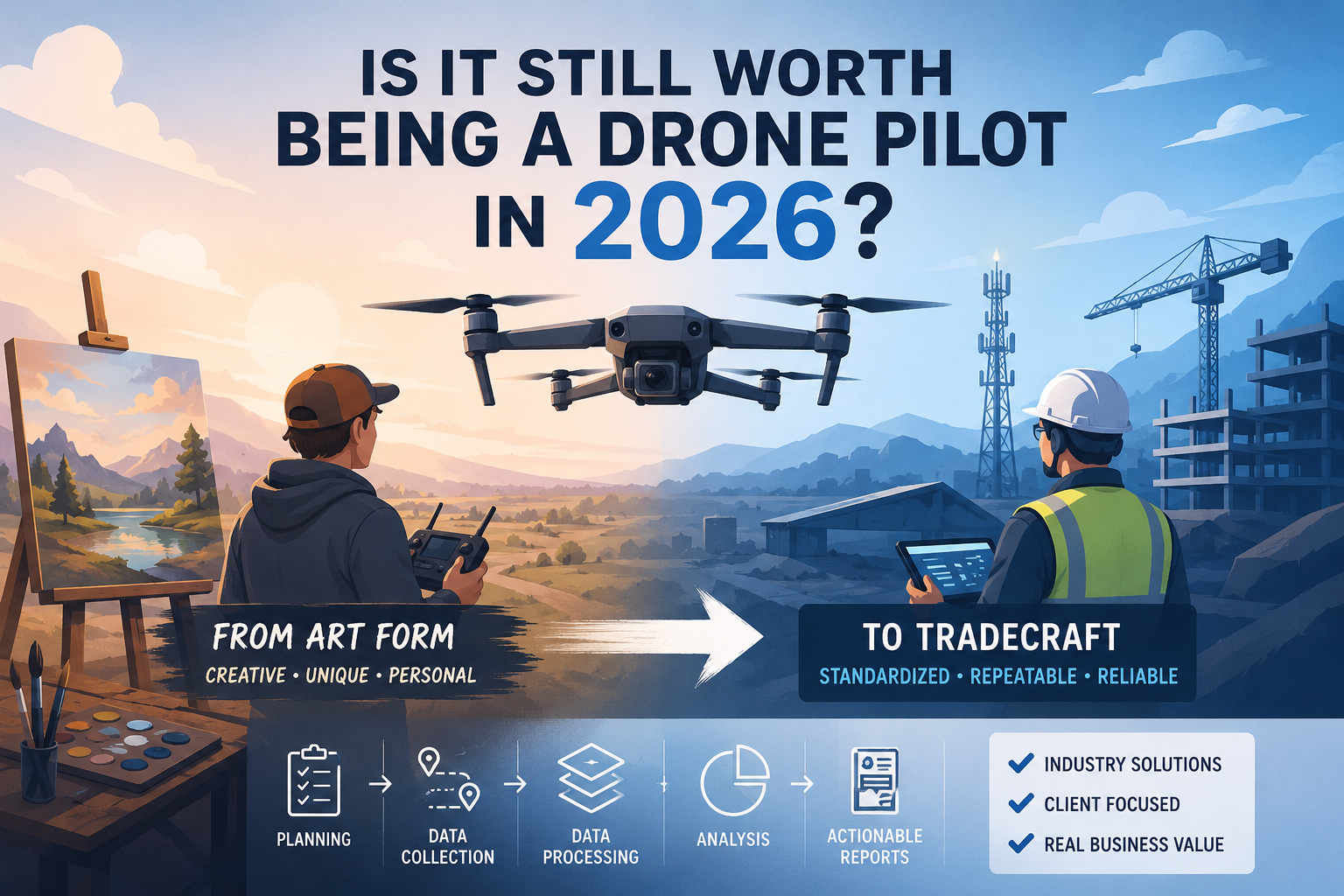
The biggest shift has also been the move away from simple aerial photography toward specialized data collection. Clients increasingly need orthomosaic maps, 3D models, asset inspections, thermal imagery, and actionable reports rather than just photos. As a result, the industry is transforming from an art form into a tradecraft. Early drone work often rewarded creativity and unique camera skills, but today's commercial market is more focused on repeatable processes, standardized deliverables, and operational efficiency. This has made the industry more competitive, as many services have become easier to replicate and compare on price.
At the same time, many industries are only beginning to adopt drone technology at scale. Large property owners, construction firms, utility companies, cell tower operators, and engineering consultants continue to expand their use of aerial data. For pilots willing to travel, opportunities often extend far beyond their local market. Many commercial projects require nationwide coverage, creating opportunities for operators who can reliably perform work across multiple states and adapt to different job sites and regulations.
So, is it still worth being a drone pilot in 2026? For those expecting easy money from aerial photos alone, probably not. But for professionals willing to develop complementary skills, understand client needs, travel when necessary, and provide reliable business solutions, the drone industry remains a growing field with significant opportunities. The pilots who thrive today are not simply flying drones—they are helping businesses make better decisions through accurate and efficient data collection.